
Guide
Do I Need a Hearing Test? 8 Signs It's Time
Published 3 September 2026 · 7 min read
The short answer
If you recognise two or more of the signs below, it is worth booking a hearing test. Hearing loss usually develops slowly, so the people around you often notice it before you do. A 60-minute private hearing test checks your ear health, measures your hearing accurately, and tells you whether any action is needed — no GP referral required.
Book a hearing test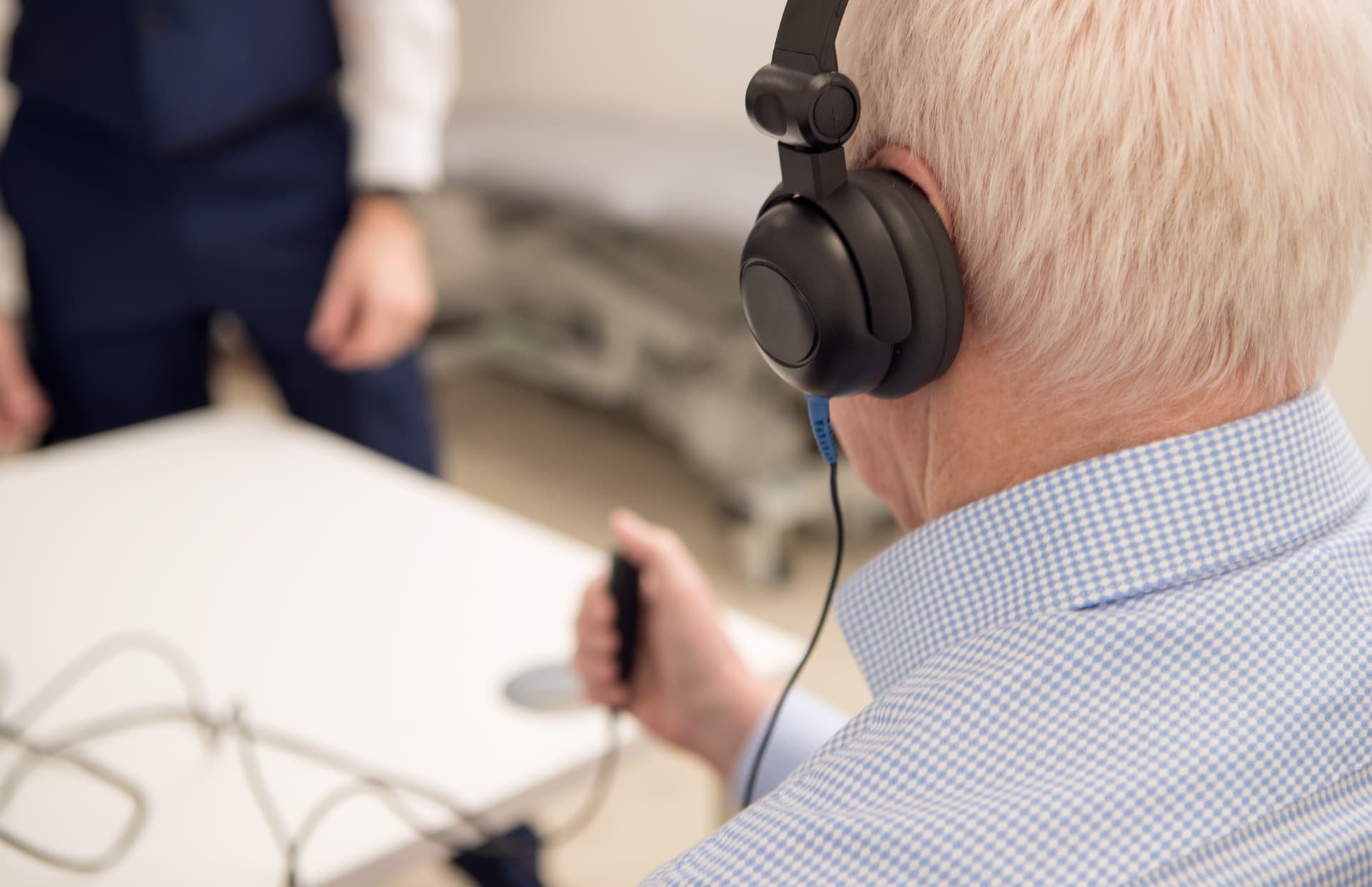
Many people put off a hearing test because they are not sure whether their hearing is "bad enough" yet. The truth is that hearing loss is rarely dramatic at first. It creeps in: the TV volume creeps up, restaurant conversation becomes harder, and you find yourself guessing at words rather than hearing them clearly.
Because the change is gradual, your brain adapts and fills in gaps. That is why family members often notice a problem before the person with hearing loss does. A hearing test simply gives you an objective picture of where your hearing stands.
8 signs you should book a hearing test
1. You turn the TV up louder than others need
This is one of the most common early signs. If you need the TV louder than the rest of the household, or you rely on subtitles more than you used to, your hearing may have dropped at the higher frequencies where speech clarity lives.
2. You struggle in restaurants, meetings or groups
Background noise is where hearing loss first shows up. If you can hear someone fine in a quiet room but struggle when there is chatter, music or traffic, your brain is working harder to separate speech from noise — a classic early sign.
3. You often ask people to repeat themselves
Occasional "pardon?" is normal. If it becomes a habit, especially with women's and children's voices, it usually points to a high-frequency hearing loss. These frequencies carry consonants, so words sound mumbled rather than quiet.
4. Phone calls are harder than face-to-face conversation
On the phone you lose the visual cues of lip-reading and body language. If phone calls have become tiring or you find yourself swapping to loudspeaker, a hearing test will show whether the phone signal or your hearing is the issue.
5. Family or friends have mentioned it
This is one of the most reliable signs. When several people mention that you are missing things, it is worth listening. They are hearing the gaps that your brain is smoothing over.
6. You have ringing, buzzing or hissing in your ears
Tinnitus often accompanies hearing loss, even a mild one. It is more noticeable in quiet environments and can be the first symptom that prompts people to seek help. You can read more in our guide to tinnitus causes and what helps.
7. You start avoiding social situations
If dinners, parties or work meetings have become exhausting because you cannot follow the conversation, some people begin to withdraw. This is one of the hidden impacts of untreated hearing loss and one of the best reasons to act early.
8. One ear hears better than the other
A noticeable difference between ears is not normal and should always be checked. It can be caused by wax, fluid, Eustachian tube dysfunction or, less commonly, a condition that needs prompt investigation.
Recognise a few of these signs?
A 60-minute comprehensive hearing test in Kensington or Chelsea will give you a clear answer — and you do not need a referral.
- 60 minutes, one-to-one with Scott
- Wednesdays & Friday mornings
- Kensington & West London
- No GP referral needed
60-minute comprehensive hearing assessment · No referral required
What a hearing test actually checks
A proper hearing test is more than beeps through headphones. At Drummond Hearing the appointment includes:
- Video otoscopy: a look inside the ear canal to check for wax, infection or eardrum problems.
- Pure tone audiometry: the classic hearing test that measures the quietest sounds you can hear at different pitches.
- Tympanometry: a quick check of middle ear pressure and eardrum movement.
- Consultation: time to discuss your lifestyle, your concerns and whether hearing aids, monitoring or onward referral is the right next step.
You can read the full walkthrough in our article on what happens at a hearing test.
Book now or watch and wait?
Arrange a hearing assessment if you recognise several signs above or notice a difference between your ears. If hearing has changed suddenly in one or both ears, seek urgent GP or NHS 111 advice today instead of waiting for a routine booking. Read the NHS guidance.
Watch and wait is reasonable only if your hearing is stable, you have no other symptoms, and you simply want a baseline for comparison. Even then, a baseline test is useful because it lets you spot small changes early.
What to expect at Drummond Hearing
Scott Drummond sees patients privately at the Bupa Cromwell Hospital in Kensington and at Visit Health in West London. Appointments are unhurried, usually available within a few days, and you leave with a clear understanding of your results.
- 60-minute one-to-one appointment
- Pure tone audiometry, tympanometry and full consultation
- Same-day audiogram and explanation
- No GP referral needed
- Independent advice on Starkey, Phonak and ReSound hearing aids
Ready to book?
Book online for an adult appointment, or call us if you prefer to arrange a paediatric or more complex appointment.
Frequently asked questions
- How do I know if I need a hearing test?
- The clearest signs are turning the TV up louder than others need, struggling to follow conversation in background noise, frequently asking people to repeat themselves, and family or friends mentioning that you miss sounds. If two or more of these sound familiar, a hearing test is worthwhile.
- At what age should I have my hearing tested?
- There is no set age. Hearing loss becomes more common after 50, but it can affect adults at any age — especially after noise exposure, ear infections, or if it runs in the family. A baseline test in your 40s or 50s is sensible even if you have no symptoms.
- What happens during a private hearing test?
- At Drummond Hearing the appointment lasts 60 minutes. It includes a discussion of your hearing history, video otoscopy to check the ear canal and eardrum, pure tone audiometry to measure hearing levels, tympanometry to check middle ear function, and a clear explanation of the results with time for questions.
- Do I need a GP referral for a hearing test?
- No. Private hearing tests do not require a GP referral. You can book directly online or by phone and usually be seen within a few days.
- How long does a hearing test take?
- A thorough private hearing test takes around 60 minutes. A quick screening may take 20 minutes, but that will not give the full picture of ear health and hearing ability that a comprehensive assessment provides.
- Can a hearing test detect more than hearing loss?
- Yes. The examination can reveal ear wax, fluid behind the eardrum, Eustachian tube dysfunction, eardrum problems, and differences between the two ears. Some findings may need onward referral to an ENT specialist.
- What if the test shows mild hearing loss?
- Mild hearing loss is common and does not always mean hearing aids are needed immediately. The audiologist will discuss whether hearing aids would help, whether monitoring is appropriate, and what to watch for over time.
- How often should I have my hearing tested?
- If you have no concerns, every 2–3 years is reasonable. If you already wear hearing aids, have known hearing loss, or notice changes, an annual test is recommended.
Book a private hearing test in Kensington or Chelsea
If you are wondering whether it is time for a hearing test, the easiest next step is to book one. You will have a full 60-minute assessment, same-day results, and clear advice on whether hearing aids, monitoring or onward care is right for you.
Easy to reach from Kensington, Chelsea and every area we cover. See also our hearing services.
Book a hearing testThis article is for general information and isn't a substitute for individual medical advice.