Speech or language concerns
Delayed speech, unclear pronunciation or a plateau in language development. Hearing is the first thing to rule out before anything else is investigated.

Children's hearing
Gentle, unhurried paediatric hearing assessments carried out personally by Scott Drummond — for glue ear, speech concerns, school referrals and repeated ear infections. No GP referral needed, and results explained to you before you leave.
Children rarely report hearing difficulty — they simply adapt, and the adaptation is what gets noticed. These are the reasons parents most often bring a child in.
Delayed speech, unclear pronunciation or a plateau in language development. Hearing is the first thing to rule out before anything else is investigated.
Recurrent infections frequently leave fluid behind the eardrum. The infection clears; the hearing loss can quietly persist for months.
Inattention, tiredness by the afternoon and 'not listening' are classic presentations of a mild fluctuating hearing loss in the classroom.
The commonest cause of childhood hearing loss, and the easiest to confirm — tympanometry gives a clear answer in seconds.
A baseline audiogram gives you something to compare against later, which is worth having even when everything appears normal.
Examined with a video otoscope so you can see exactly what we see, with removal only where it is safe and comfortable for the child.
A conversation with you about pregnancy and birth, ear infections, speech development, school reports and what prompted the visit.
A video camera examination of both ear canals and eardrums — shown on screen, which most children find genuinely interesting.
A two-second test per ear measuring how the eardrum moves. This is what identifies glue ear and middle-ear fluid.
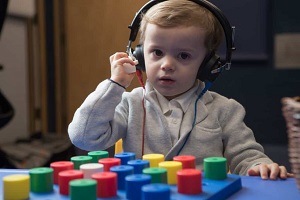
Play audiometry for younger children, standard headphone audiometry for older ones. Both ears, across the pitches that matter for speech.
The audiogram explained in plain language, a copy to take home, and a clear recommendation — monitor, treat, or refer to ENT.
Nothing in the appointment is uncomfortable and nothing is rushed. The adult version of the same assessment, including how to read an audiogram, is described in what happens at a hearing test.
Glue ear affects the majority of children at some point before school age. Thick fluid collects behind the eardrum, usually after a cold or ear infection, and muffles hearing by 20 to 30 decibels — enough to blur speech in a noisy classroom while leaving quiet one-to-one conversation intact. It commonly fluctuates, which is exactly why it gets mistaken for inattention.
Most cases resolve on their own within three months, so the standard approach is watchful waiting with repeat testing rather than immediate intervention. Where it persists and hearing is affected, ENT referral for grommets or hearing aid support becomes appropriate. The full clinical picture is set out in audiological diagnosis and management of glue ear.
A single appointment usually settles the question. If everything is normal, you have a baseline; if it isn't, you have a plan.
Call to book a children's hearing testFamilies visit us from Kensington, Chelsea, Notting Hill and across West London.