
Insight
Getting used to hearing aids: what to expect in your first 6 months
25 June 2026 · 8 min read
Almost everyone expects new hearing aids to feel like switching on a light. In practice it is closer to learning a language you used to speak fluently. The devices are working properly from the first appointment — but your brain has spent years quietly filtering out the sounds it stopped receiving, and it needs a little time to take them back on board.
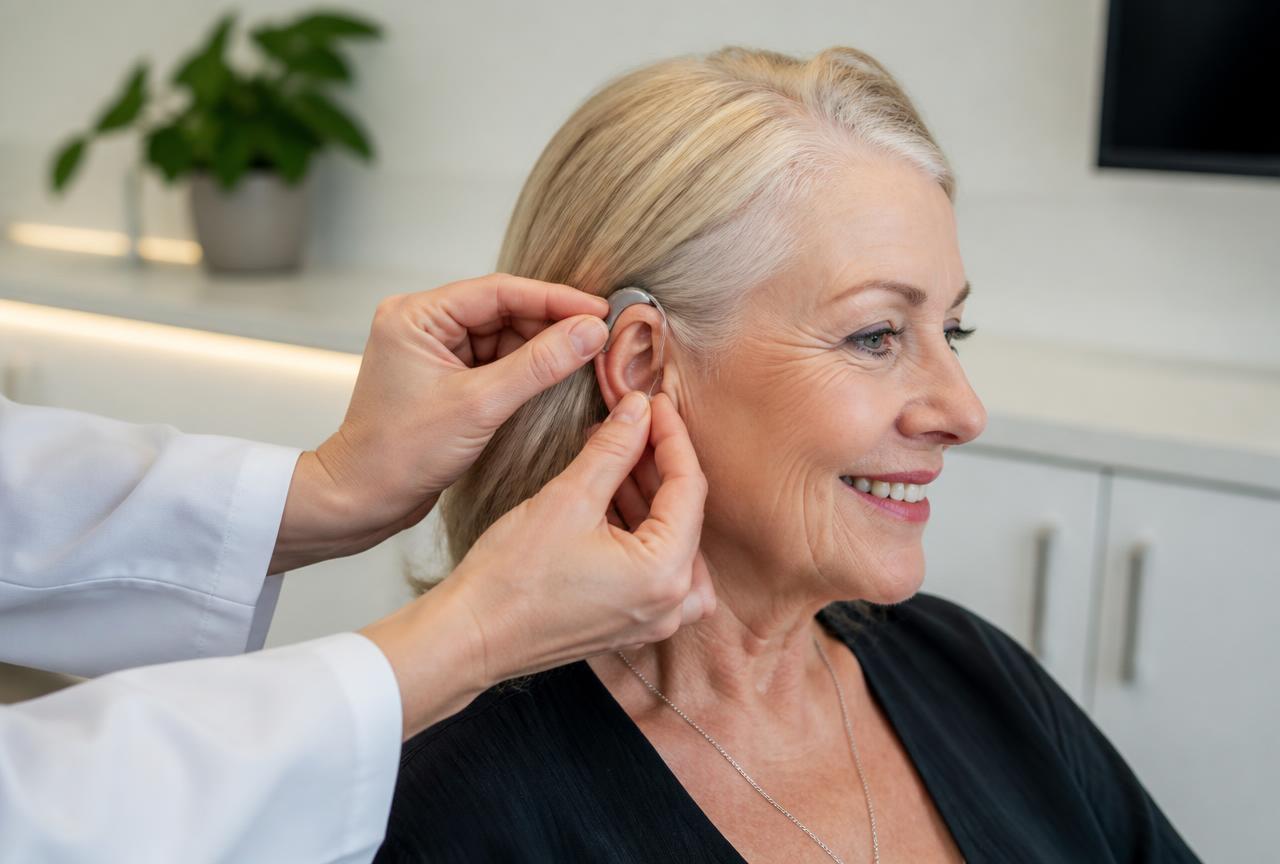
This guide walks through what actually happens in the first six months of hearing aid use — day one, the first week, the first month, and the months that follow — along with the problems people most often run into and what to do about them.
Day one: your fitting appointment
At the fitting, your hearing aids are programmed to your audiogram — the results of your hearing test. Prescription alone is not enough, though. Every ear canal has a different shape and resonance, so the devices should be verified with real-ear measurement: a fine probe microphone sits in the canal and measures what the hearing aid is actually delivering at your eardrum, rather than what the software predicts.
You will also be shown how to insert and remove the devices, how to charge them or change batteries, and how to pair them with your phone if they stream. Most people notice two things immediately: sounds are brighter than expected, and their own voice sounds unusually loud or hollow. Both are normal.
Week one: quiet first
The first week is about exposure, not endurance. Start at home and in other quiet places, wearing the aids for a few hours at a time and building up as they start to feel unremarkable. Reading aloud for ten minutes a day is a genuinely useful exercise — it retrains your brain to accept your own amplified voice.
Expect to rediscover a surprising number of everyday sounds: the kettle, the fridge, indicator clicks in the car, footsteps on the stairs, the rustle of a newspaper. These are not faults with the hearing aids. They are the sounds that faded so gradually you stopped registering they had gone. Within a couple of weeks your brain reclassifies most of them as background again.
Weeks two to four: building wear time
By the second week, the target is longer, more consistent wear — ideally all waking hours by the end of the month. Inconsistent use is the single biggest reason people struggle to adapt: each long gap resets some of the progress your brain has made.
This is also when the first follow-up appointment matters most. Come with specifics rather than a general impression: "cutlery in the kitchen is sharp", "I still lose my wife's voice in the car", "the television is fine but the radio isn't". Precise feedback lets the programming be fine-tuned properly, and small adjustments at this stage make a disproportionate difference later.

Months two and three: the real world
Once quiet listening feels natural, the harder environments come into play — restaurants, family gatherings, meetings, places of worship, the theatre. Modern devices handle these situations far better than older technology, and AI-driven sound processing adjusts automatically as you move between them, but strategy still helps: sit with your back to the wall, choose a table away from the kitchen, and face the person you most want to hear.
Phone calls and television usually improve markedly around this point, particularly if your hearing aids stream audio directly. The manufacturer's app is worth using sparingly — a small volume nudge in a difficult room is fine, but constantly overriding the automatic settings tends to work against the adaptation process.
Months four to six: settled
By now, most people stop thinking about their hearing aids. Success at six months does not mean perfect hearing in every situation — no hearing aid restores normal hearing — it means conversations are comfortable, you are less tired at the end of a social evening, and you would notice immediately if you left the house without them.
This is also the point for a review: a re-test to confirm your hearing hasn't changed, a fine-tune based on six months of real-world use, and a physical service of the devices. Continuing to wear them matters beyond convenience — the evidence on hearing loss and dementia risk points strongly towards treated hearing loss being better than untreated.
Common early problems — and what they mean
- My own voice is too loud or boomy. The occlusion effect. Usually settles within two weeks; if not, the venting or dome style can be changed.
- They whistle. Sound is escaping and being picked up again — often a poorly seated device or wax in the canal. Re-seat first, then get the ears checked.
- Everything sounds sharp or tinny. Common early on because high-frequency sounds have been absent for years. Report it at your follow-up rather than turning the volume down permanently.
- They feel uncomfortable. Mild awareness is normal; soreness is not. A different dome size or mould adjustment fixes most cases.
- No sound at all. Check the charge, then the wax filter and tubing — see the troubleshooting guide.
Looking after them
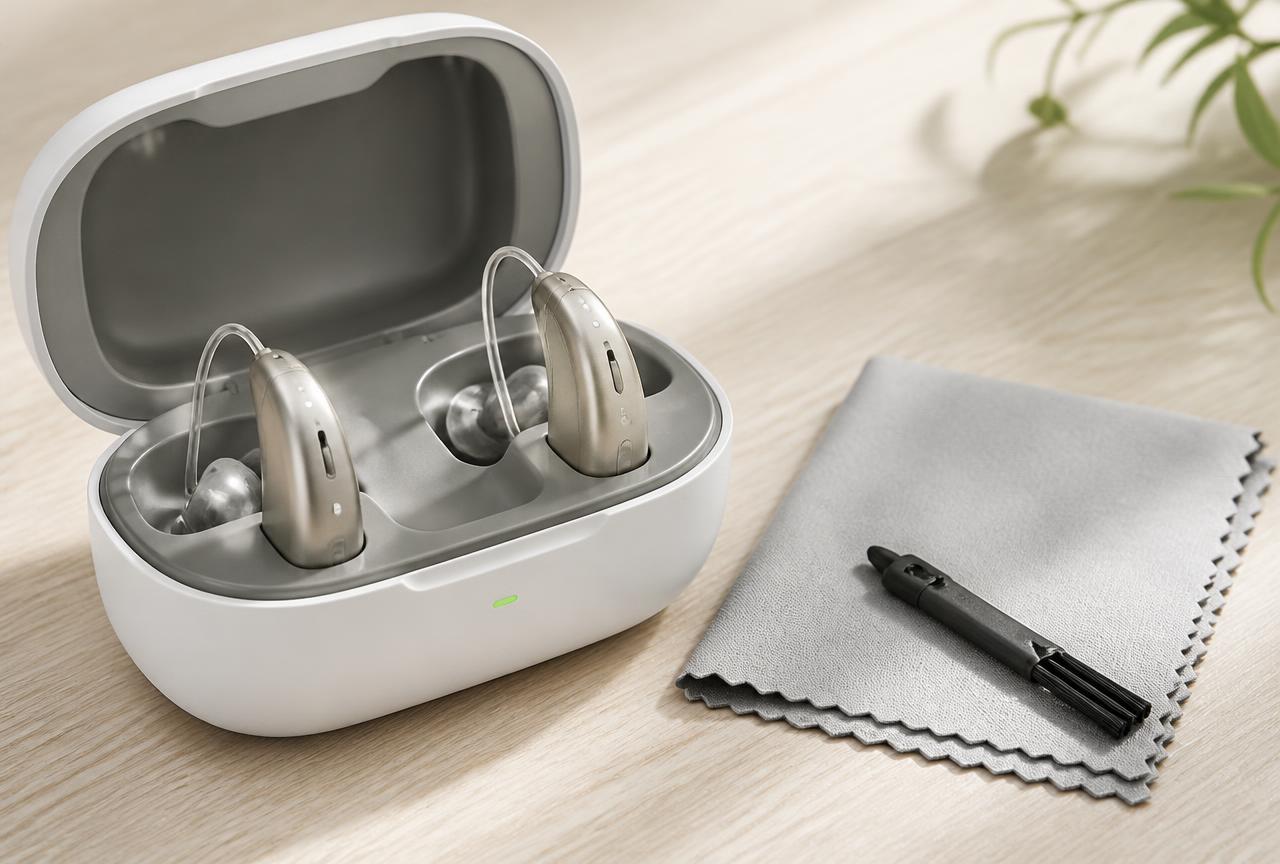
Daily care takes under a minute. Wipe the devices with a dry cloth each evening, brush the microphone ports and the end of the receiver, and leave them out of the ear overnight in the charger or with the battery door open so moisture can escape. Never use water, alcohol or wipes, and keep them away from hairspray, bathrooms and radiators.
Wax filters are the most common cause of a "broken" hearing aid and are designed to be replaced at home every few weeks. Our patient guide to your hearing aids covers the routine in more detail.
When to call rather than wait
Don't sit on a problem until your next scheduled appointment if you have pain, discharge or a sudden drop in hearing; if one aid has stopped working entirely; if persistent whistling continues after re-seating; or if, after a month of consistent wear, things simply are not improving. Early aftercare is part of the package — using it is what separates hearing aids that get worn from hearing aids that end up in a drawer.
Frequently asked questions
How long does it take to get used to hearing aids?
Most people feel reasonably comfortable within four to six weeks, and fully settled by around three to six months. The devices themselves are ready on day one — it's the brain that needs time to re-learn sounds it has been missing, often for years.
Should I wear my hearing aids all day from the start?
Not necessarily. Many people find it easier to build up gradually — a few hours a day in quiet surroundings during the first week, then longer periods in busier places. By the end of the first month, the aim is all-day wear, because consistent use is what drives the adjustment.
Why does my own voice sound strange with hearing aids?
This is called the occlusion effect and it is very common in the first couple of weeks. It usually settles as your brain adapts, and if it doesn't, the fitting or the acoustic coupling can be adjusted at your follow-up appointment.
Why do my hearing aids whistle?
Whistling (feedback) usually means sound is leaking back out of the ear — most often because the device or dome isn't seated properly, or because wax has built up in the ear canal. If it persists once the aid is correctly in place, it needs checking in clinic.
How often should hearing aids be serviced?
A check-up every six to twelve months is sensible, alongside daily cleaning at home. An annual review also re-tests your hearing so the programming can be updated if your hearing has changed.
Thinking about your first hearing aids?
A full hearing assessment is the starting point — and the aftercare that follows matters just as much as the technology you choose. If you'd like to know what private hearing aids cost or how the main brands compare, start there — otherwise, book an assessment and we'll talk it through in person.
Fittings and follow-ups are booked by patients from Kensington, Chelsea and every area we cover.
Book a hearing assessmentThis article is for general information and isn't a substitute for individual medical advice.