
Insight
Signs you may have hearing loss — and when to get tested
22 January 2026 · 8 min read
Hearing loss almost never arrives overnight. It creeps in over years, and because the brain adapts as it goes, the person losing their hearing is usually the last to notice. On average, people wait around a decade between first suspecting a problem and doing something about it.
This guide covers the signs worth paying attention to, the ones that need urgent attention, and how to tell a temporary blockage apart from something permanent.
The early signs most people notice first
Early hearing loss is rarely about volume. It is about clarity — and it shows up in specific situations long before quiet conversation becomes difficult:
- Everyone seems to mumble. Speech is audible but unclear. If several unrelated people appear to have started mumbling, the common factor is usually your hearing.
- Restaurants, pubs and groups are hard work. One-to-one conversation in a quiet room is fine; add background noise or a second speaker and you lose the thread.
- The television is louder than others find comfortable. Or subtitles have quietly become permanent.
- You ask people to repeat themselves — or mishear similar-sounding words and answer the wrong question.
- You miss the doorbell, the phone, or the kettle. High-pitched sounds go first.
- Social events leave you exhausted. Listening fatigue is one of the most reliable early signs and one of the least recognised — your brain is working overtime to fill in gaps.
- Someone else has mentioned it. Family notice before you do, and they are usually right.
The reason clarity goes before volume is anatomical. Age-related and noise-related loss affects the high frequencies first. Vowels are low-pitched and carry the loudness; consonants like s, f, th and t are high-pitched and carry the meaning. Lose the highs and speech stays audible but turns blurred — then background noise finishes the job.
Signs that need urgent attention
Most hearing loss is gradual and can be dealt with at your own pace. These cannot:
- Sudden hearing loss in one or both ears. Seek urgent GP or NHS 111 advice today; do not wait for a routine hearing test. See NHS guidance on hearing loss.
- Hearing that is clearly worse in one ear without an obvious cause. Asymmetry always warrants a proper assessment.
- Hearing loss with dizziness, pain or discharge.
- New tinnitus in one ear only.
Is it wax, or is it hearing loss?
A blocked, full or muffled ear is far more often wax, a cold or Eustachian tube dysfunction than permanent hearing loss. Some rough guidance: wax tends to affect one ear, comes on over days to weeks, often feels like pressure or blockage, and may follow cotton bud use or hearing aid wear. Sensorineural hearing loss tends to affect both ears, develops over years, and feels like a loss of clarity rather than blockage.
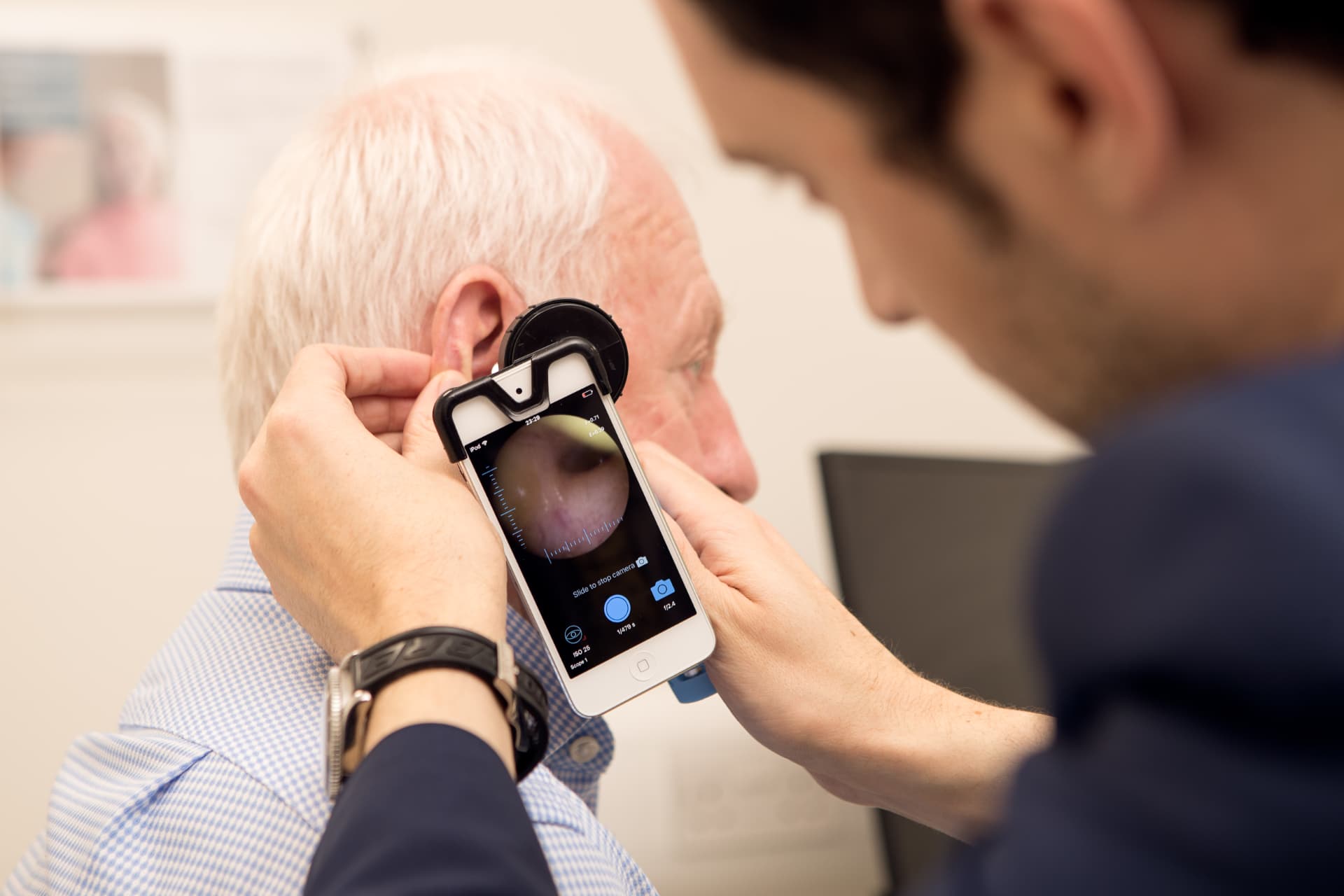
You cannot reliably tell the difference from the outside, which is why every assessment starts with a camera. If you want the detail, read what earwax actually is and how impaction is treated. Where wax is the whole problem, it is usually removed by microsuction on the day and hearing returns immediately.
Tinnitus as an early warning
Ringing, buzzing or hissing frequently accompanies hearing loss, and often appears before you notice any difficulty hearing. It tends to be most obvious in a quiet room or at night. Tinnitus on its own is not dangerous, but it is a reason to have your hearing measured — and people who treat the underlying hearing loss usually find the tinnitus becomes less intrusive.
What causes it
- Age (presbycusis). The commonest cause. Gradual, symmetrical, high-frequency loss from the hair cells in the cochlea.
- Noise. Loud workplaces, live music, motorcycles, shooting and years of headphone use all accumulate. Noise damage is permanent but entirely preventable with protection.
- Wax and middle-ear problems. Usually reversible.
- Medical causes. Some medications, ear infections, otosclerosis, head injury and, rarely, tumours affecting the hearing nerve.

Why waiting isn't neutral
Untreated hearing loss is not simply an inconvenience. It is associated with social withdrawal, low mood and, in the Lancet Commission's analysis, it is the largest modifiable midlife risk factor for dementia. The ACHIEVE trial found the clearest benefit from hearing treatment in older adults already at higher risk — the evidence is covered in full in hearing loss and dementia.
There is also a practical reason not to wait: the longer the brain goes without high-frequency sound, the more adjustment is needed when it returns. People who address hearing loss early adapt to hearing aids faster and more comfortably.
When to book a hearing test
You do not need to be struggling badly, and you do not need a GP referral. It is worth booking if you recognise two or three of the early signs above, if you have tinnitus, if you have worked in noise, or if you are over 55 and have never had a baseline audiogram. Anyone already wearing hearing aids should be re-tested annually.
A full diagnostic assessment takes about an hour and is painless: history, video otoscopy, pure-tone audiometry by air and bone conduction, tympanometry, and speech testing where relevant. You are shown your results on screen, they are explained in plain language, and you take a copy home. The step-by-step version — including how to read your own audiogram — is in what happens at a hearing test, and the full appointment is described on the hearing assessment page.

Common questions
- What is the first sign of hearing loss?
- For most people it isn't volume — it's clarity. Speech sounds audible but unclear, particularly in background noise, and consonants like s, f, th and t become hard to separate. Turning the television up and asking people to repeat themselves usually follow later.
- Is mumbling a sign of hearing loss?
- If several different people seem to mumble, the more likely explanation is high-frequency hearing loss rather than everyone's speech changing. High-pitched consonants carry meaning, so losing them blurs words without making them quieter.
- Is tinnitus a sign of hearing loss?
- Often, yes. Tinnitus — ringing, buzzing or hissing — commonly accompanies hearing loss, and it can appear before you notice any difficulty hearing. New or one-sided tinnitus should always be assessed.
- Are blocked ears a sign of hearing loss?
- A sensation of blockage is more often wax, a cold or Eustachian tube dysfunction than permanent hearing loss. Video otoscopy tells the two apart in seconds, and wax can usually be removed the same day.
- Is hearing loss linked to dementia?
- Untreated hearing loss in midlife is recognised as the largest modifiable risk factor for dementia in the Lancet Commission's analysis. Treating hearing loss is not proven to prevent dementia, but the association is one reason not to wait years before getting tested.
Not sure whether it's worth checking?
If you have recognised yourself in any of the signs above, a baseline hearing test settles the question either way. A full 60-minute diagnostic assessment gives you a clear picture of your hearing on paper, with independent advice and no obligation to do anything about it.
We see patients from Kensington, Chelsea and Knightsbridge, plus every area we cover.
Book a hearing assessmentRelated reading: what happens at a hearing test, sudden hearing loss and when to seek urgent help, how much hearing aids cost in the UK and digital hearing aids explained.
This article is for general information and isn't a substitute for individual medical advice.