
Guide
Sudden hearing loss: when to seek urgent medical help
Published 11 December 2025 · Updated · 7 min read
Most hearing loss creeps up over years. Occasionally it doesn't — the hearing in one ear drops away over a few hours, or someone wakes up and the world sounds flat and distant on one side. That version is different, and it is the one thing in audiology that genuinely shouldn't wait until Monday.
Seek urgent medical advice
If hearing suddenly drops in one or both ears, ask for an urgent GP appointment or contact NHS 111 today. An unexplained sudden loss may need specialist assessment within 24 hours. Do not wait for a routine clinic booking or assume it is too late to seek help because several days have passed.
Get help from NHS 111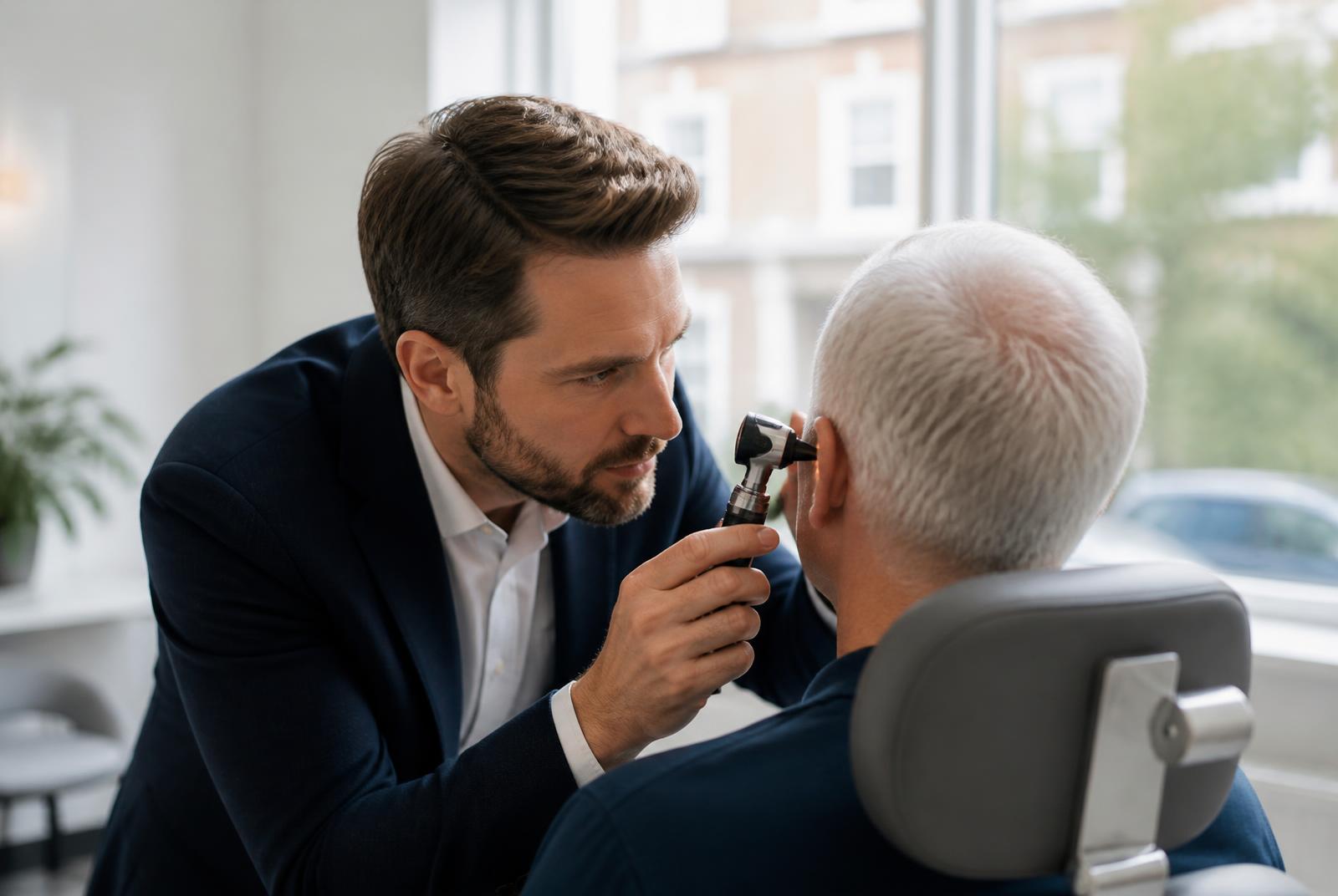
What sudden sensorineural hearing loss is
Sudden sensorineural hearing loss (SSNHL) is a rapid drop in hearing coming from the inner ear or hearing nerve, rather than from anything blocking the ear canal. It is usually one-sided and typically develops within 72 hours — sometimes over a couple of days, often overnight.
It is not common, but it is not rare either, and it turns up across all age groups including people in their thirties and forties. In the large majority of cases no specific cause is ever identified. A minority follow a viral illness, an inner ear or circulatory problem, or an autoimmune condition. The absence of an obvious explanation is normal and is not a reason to wait.
Is it wax, an infection, or something else?
Most people's first assumption is wax, and often they are right — wax is by far the most common reason an ear suddenly feels blocked. The patterns do differ, though:
- Ear wax. Usually gradual, often described as fullness or blockage rather than loss of clarity, and frequently follows cotton bud use, earphones or a period of itching. See our guide to ear wax impaction.
- A cold or Eustachian tube problem. Tends to affect both ears or move between them, comes with popping, crackling and pressure, and usually eases as the cold clears — the pattern covered in our article on crackling and popping in the ear.
- Middle ear infection. Typically painful, often with fever, and more common after an upper respiratory infection.
- Sudden sensorineural loss. One ear, fast onset, speech sounds distorted rather than merely quiet, and very commonly accompanied by new tinnitus or a feeling of imbalance.
A quick self-check that is useful but not conclusive: hold your phone to each ear in turn on a call. A clear, marked difference between the two sides warrants being seen today.
Signs that mean urgent care
- Hearing loss in one ear that appeared over hours or a few days.
- Sudden muffling or distortion of speech on one side.
- New tinnitus in the affected ear, particularly if it arrived with the loss.
- Dizziness, vertigo or unsteadiness alongside the hearing change.
- Facial weakness, severe pain, discharge, or loss following a head injury.
Why prompt assessment matters
NICE recommends immediate referral, to be seen within 24 hours, when unexplained hearing loss developed over three days or less within the past 30 days. The three-day period describes how quickly the hearing changed; it is not a deadline after which assessment becomes pointless.
A specialist will discuss treatment options and their benefits and risks. NICE advises considering a steroid for idiopathic sudden sensorineural hearing loss. The American Academy of Otolaryngology guideline allows initial corticosteroids within two weeks of symptom onset. These treatment timeframes are not a reason to delay seeking help.
What to do today
- Call NHS 111 or your GP and ask for a same-day appointment, explaining that the hearing loss was sudden and one-sided.
- Attend A&E if you cannot be seen the same day, or if there is severe dizziness, facial weakness or a recent head injury.
- Arrange a hearing test to document exactly how much hearing has been lost and in which frequencies — this guides treatment and shows whether it is working.
- Do not put drops in the ear or attempt to clear it yourself before it has been examined.
What an urgent hearing assessment involves
The assessment is quick and completely painless. Video otoscopy checks the canal and eardrum, which immediately rules wax and infection in or out. A full audiogram maps hearing in each ear across the frequency range, showing how much has been lost and whether the pattern is sensorineural. Tympanometry checks how the middle ear and eardrum are moving, separating a middle ear cause from an inner ear one.
Together those three results are exactly what an ENT department needs in order to act, and they give a baseline to measure recovery against. Our guide to what happens at a hearing test walks through each step, and the early signs of hearing loss is worth reading if the change has been more gradual than sudden.
Recovery, and what happens if hearing doesn't return
Outcomes vary widely. Some people recover fully, some partially, and some are left with a permanent loss on the affected side. Recovery, where it happens, is usually seen in the first couple of weeks, and repeat hearing tests are the way to track it.
Where hearing does not fully come back, the focus shifts to living well with it. A hearing aid fitted to the affected ear restores a great deal of what one-sided loss takes away — most obviously the ability to tell where sound is coming from and to follow conversation in a noisy room. Where an ear has little usable hearing left, there are dedicated solutions that route sound to the better ear. Tinnitus that persists alongside the loss is very often helped by the same step; our guide to tinnitus and what actually helps covers the options.
Frequently asked questions
- Is sudden hearing loss an emergency?
- Sudden hearing loss in one or both ears needs urgent medical assessment. NICE recommends specialist assessment within 24 hours when hearing loss developed over three days or less within the past 30 days and is not explained by an outer or middle ear cause. Do not wait for a routine appointment.
- Can sudden hearing loss come back on its own?
- Some people recover without treatment, but this cannot be predicted for an individual. Seek urgent medical advice rather than waiting to see whether hearing returns. Assessment remains important even if several days have passed.
- How do I know if it's just ear wax?
- Wax usually builds up gradually, often feels like fullness or blockage, and may follow cotton bud use or a period of itching. Sudden sensorineural loss tends to appear over hours, frequently on waking, and is commonly accompanied by ringing or a sense of imbalance. Only an examination can tell them apart with certainty, which is why an urgent look inside the ear is the first step.
- Should I go to A&E for sudden hearing loss?
- In the UK, contact NHS 111, your GP for an urgent same-day appointment, or attend A&E if you cannot be seen quickly — particularly when the loss comes with severe dizziness, facial weakness, or follows a head injury. An audiology assessment can run alongside that to document exactly how much hearing has been lost.
- Can stress cause sudden hearing loss?
- Stress is often blamed, but the evidence for it as a direct cause is weak. Most cases have no identifiable cause at all, and a minority follow a viral infection, an inner ear problem or a circulatory event. Assuming stress is the explanation is one of the more common reasons people delay getting seen.
- What happens if hearing doesn't come back?
- Where hearing does not fully return, the priority becomes managing the loss well: a hearing aid on the affected side, or specialised solutions where one ear has little usable hearing, along with support for any tinnitus that remains. Most people hear far better in noise and in groups once one-sided loss is addressed.
Hearing care after urgent medical assessment
Scott sees patients at the Bupa Cromwell Hospital in Kensington and at Visit Health in West London, within easy reach of Kensington, Chelsea, Knightsbridge and every area we cover. If your hearing has changed suddenly, seek urgent medical help through your GP, NHS 111 or an emergency department first. A routine clinic booking should not delay that assessment.
Book follow-up hearing careSources
This article is for general information and isn't a substitute for individual medical advice. If your hearing has changed suddenly, seek urgent medical care today.